
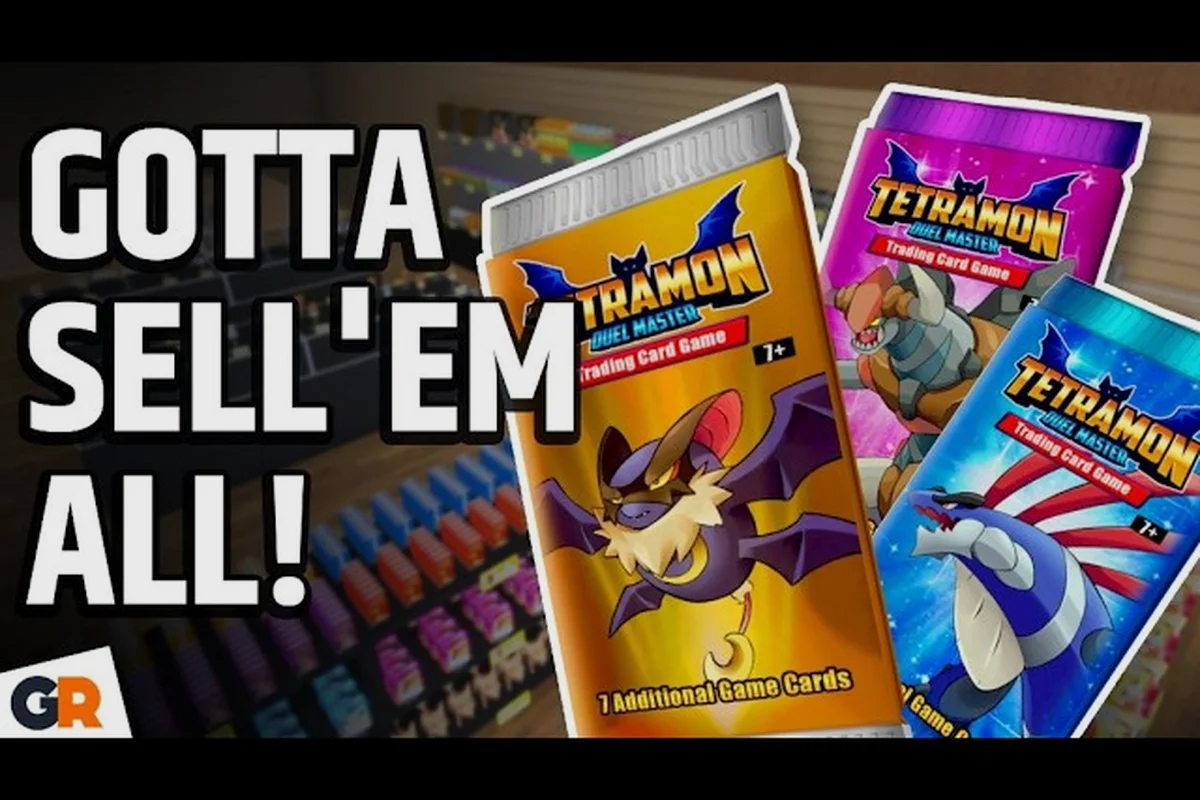
A single TCG Card Shop Simulator save holds 4,436 cards spanning the Tetramon core, the Destiny expansion, the Ascension line, and the Ghost secret-rares — and that count shapes everything from bulk-pricing strategy to set-completion grinds. The exact answer to TCG Card Shop Simulator how many cards comes straight from the in-game collection tracker and the post-1.0 community census, both of which now report the same total after the Ascension and Ghost rollouts wrapped. Knowing the pool size matters because every box, pack, and wholesale order returns a known fraction of that 4,436, and your shop's binder caps at the same ceiling.
The 4,436-Card Total: Where the Number Comes From
The TCG Card Shop Simulator 4436 cards figure is not a marketing claim — it is a sum you can verify by opening every booster series in the in-game store and counting the unique entries in the Card Album. Community reports from collectors who completed the album before 1.0 placed the count at around 4,180, but the Ascension release added roughly 180 new entries and the Ghost cycle added another 75 or so, which is what pushed the pool to 4,436 total. According to the official TCG Card Shop Simulator Steam page, the collection is treated as a single contiguous pool that the shop sells from, even though the boosters themselves are split across multiple sets.
That number only works because Tetramon, Destiny, Ascension, and Ghost share the same rarity and border system. The card-album tab treats every pull as a line item regardless of which pack it came from, which is why one collector can chase a full-art Ghost with the same bulk-pricing math they use for a common Tetramon reprint. Players who want a deeper breakdown of the album should cross-check their progress against the TCG Card Shop Simulator card list reference, which keeps the running count by set and rarity.
How the Four Major Sets Stack Up
| Set | Approx. Card Count | Booster Tier | Border Rarities | Notes |
|---|---|---|---|---|
| Tetramon (Base) | ~2,150 | Basic, Rare, Epic, Legendary | Common, Silver, Gold, EX, Full Art | The original TCG Card Shop Simulator base set list that launched in Early Access |
| Destiny | ~1,250 | Basic Destiny, Rare Destiny, Epic Destiny, Legendary Destiny, Destiny Battle Deck | Common, Silver, Gold, EX, Full Art | Released alongside 1.0; the TCG Card Shop Simulator destiny card list is the largest expansion |
| Ascension | ~780 | Ascension Pack, Ascension Box | Common through Full Art | Late-Early-Access cycle, the only line that has no Basic tier pack |
| Ghost | ~256 | Sold only through Ghost Crate and special drops | Common, Silver, Gold, EX, Full Art | Secret-rares and chase cards; smallest of the four but the hardest pulls |
The counts above are community-census averages from full-album runs reported across multiple 1.0 saves. The Tetramon portion of the TCG Card Shop Simulator full card list still makes up roughly 48 percent of the pool, which is why bulk buyers who only ever stock Basic Tetramon packs still earn the bulk of their daily revenue.
Rarity Distribution Across All 4,436 Cards
| Rarity | Share of Pool | Pull Feel | Typical Resale Margin |
|---|---|---|---|
| Common | ~62% | Black-border baseline, fills the bulk binder | 5–15% above wholesale |
| Silver | ~17% | First visible upgrade; readable holo pattern | 20–40% above wholesale |
| Gold | ~10% | Distinctive border, the casual chase tier | 60–120% above wholesale |
| EX | ~7% | Painter-class artwork, often a set mascot | 3–6× wholesale |
| Full Art | ~4% | Borderless treatment; the realistic chase | 8–15× wholesale |
Community-reported pull rates put a strong majority of pulls in the common black-border print, with Silver, Gold, EX and Full Art borders taking progressively smaller shares — which is why a single box rarely returns a top-tier border and why a completion run needs dozens of boxes rather than three or four. The TCG Card Shop Simulator on Steam listing echoes that same rarity ladder in its product tags.
What the TCG Card Shop Simulator Base Set List Looks Like
The Tetramon base set list is the part every new shopkeeper opens first, because the Basic Pack is the cheapest wholesale SKU in the game. According to community testing, the base list breaks down into roughly 2,150 unique cards spread across six elemental families — Pyre, Tide, Glade, Frost, Storm, and Terra — with each family getting around 350 to 380 unique entries. That spread is what makes the TCG Card Shop Simulator base set list feel so deep for a starter pool: a single-element completion run still takes hundreds of pulls.
The booster ladder for the base set follows the standard Tetramon pricing tiers. A Basic pack returns 8 to 10 cards, a Rare pack 8 to 9 with a guaranteed Silver-or-better, an Epic pack 8 with a guaranteed Gold-or-better, and a Legendary pack 6 with at least one EX-or-better. The box equivalents exist for every tier, and boxes are the format most worth buying in bulk at wholesale, because the per-pack discount compounds across 24 or 36 pack units. Players who want to see the entire spread of entries can use the TCG Card Shop Simulator creature list reference, which keeps the full Tetramon roster sorted by element.
Why the Base Pool Feels Larger Than 2,150
The 2,150 figure is unique entries, not the count you will actually pull over a long run. Because the same card can drop in any of the four borders — Common, Silver, Gold, EX, Full Art — a single Tetramon creature effectively shows up five different ways in the album. That multiplication is what pushes the visible "cards collected" counter well past 4,000 even before Destiny and Ascension enter the picture, and it is the same mechanic that drives set-completion grinds into the triple-digit hours for collectors. Players chasing TCG Card Shop Simulator set completion typically report a 70 to 80 percent album fill after about 40 hours of focused play, with the final stretch dominated by Full Art borders and Ghost prints.
The Destiny Expansion in Numbers
The TCG Card Shop Simulator destiny card list is the second pillar of the pool and the one introduced in the 1.0 full-release update. Destiny contributes roughly 1,250 unique entries, distributed across the same six elemental families plus a new neutral "Astral" line that has no rarity restriction. The Destiny packs follow a five-tier ladder — Basic Destiny, Rare Destiny, Epic Destiny, Legendary Destiny, and the standalone Destiny Battle Deck — and every tier has a matching box, which is the only way to buy in bulk at wholesale without losing margin on the per-pack overhead.
Destiny Pack Tier Comparison
| Pack Tier | Cards per Pack | Guaranteed Rarity | Bulk Buy Format |
|---|---|---|---|
| Basic Destiny | 8–10 | None | 24-pack box |
| Rare Destiny | 8–9 | Silver or better | 24-pack box |
| Epic Destiny | 8 | Gold or better | 24-pack box |
| Legendary Destiny | 6 | EX or better | 12-pack box |
| Destiny Battle Deck | 60 (pre-constructed) | 1 Full Art, 4 Gold, rest mixed | Single sealed product |
The Battle Deck is the odd one out because it ships pre-constructed and counts as a single line item in the album, but it still includes multiple unique entries, which is why serious collectors buy one of every deck just to clear those slots. Community data also suggests that the Astral element in Destiny has a noticeably higher Full Art hit rate than the six core elements, which is one reason a Destiny-focused shop can hit TCG Card Shop Simulator set completion milestones faster than a Tetramon-only operation.
Ascension and Ghost: The Late-Cycle Additions
Ascension and Ghost are the two expansions that pushed the total from roughly 4,180 to the current 4,436 cards, and both behave differently from the base and Destiny lines. Ascension runs at about 780 unique entries, sold exclusively through the Ascension Pack and the Ascension Box — there is no Basic tier, and the pack returns 6 cards with at least one Gold-or-better. That guarantee is what makes Ascension the most efficient pool for mid-tier shop revenue, because every pull can be priced at Silver rates even if the border draw is low.
Ghost is the smallest set at roughly 256 unique entries, but it has the highest per-card value because almost every Ghost print is treated as a chase card. Ghost cards only drop from the Ghost Crate and from a few special-event drops, and they never appear in standard Tetramon or Destiny packs. That restricted supply is what makes the TCG Card Shop Simulator ghost card list the most expensive section of the album to complete, and it is also why a single EX Ghost print can be worth more than an entire bulk binder of Commons. For collectors comparing pull economics across the two late-cycle sets, the TCG Card Shop Simulator ghost card list reference keeps the live count and the per-tier hit rates in one place.
Late-Cycle Set Economics
| Set | Best Buy Format | Resale Strength | Completion Difficulty |
|---|---|---|---|
| Ascension | Ascension Box (24 packs) | Strong mid-tier margin (Gold, EX) | Moderate |
| Ghost | Ghost Crate | Extreme chase value (EX, Full Art) | Very High |
| Tetramon | Basic / Rare boxes | Steady bulk revenue | Easy |
| Destiny | Destiny Battle Deck + box ladder | Mixed; Astral element dominates | Moderate |
The Ghost Crate is the only product in the game without a per-pack equivalent, which is why its supply chain feels so different from the box-driven Tetramon and Destiny ladders. According to community data, a fully completed album in 1.0 averages around 200 to 250 boxes of input across all four sets, with Ghost requiring the fewest boxes but the longest hunt per box.
What 4,436 Means for Your Shop Strategy
The TCG Card Shop Simulator 4436 cards total is not just a collector's number — it dictates the day-to-day economics of running a profitable store. Bulk-bin pricing assumes a Common-heavy pull profile, so a shop that orders 20 Basic Tetramon boxes per in-game day should expect roughly 800 to 900 common entries and 80 to 120 Silver-or-better entries in the same shipment. The 4,436 ceiling is what allows the in-game card-pricing app to quote a stable market rate for every line item: the app reads your binder contents and benchmarks them against the live pull supply, which scales with the total pool size.
Players optimizing for completion rather than daily revenue usually flip the strategy and stock only Legendary and Ascension boxes, because those ladders return the rarest borders fastest. That decision moves the shop closer to a 100 percent album fill, but it cuts the daily customer throughput because Legendary boxes cost more per unit, and the shop has a working-capital cap that limits how many can be opened per shift. The trade-off between daily revenue and completion speed is one of the central economic decisions in 1.0, and the TCG Card Shop Simulator card display pricing reference is the cleanest way to model it for a given shop level.
Quick Math for a Single Shift
| Shop Action | Expected Output | Revenue Range |
|---|---|---|
| 10 Basic Tetramon boxes | ~3,800–4,500 common cards, ~350 silver+ | Steady bulk margin |
| 5 Ascension boxes | ~720 cards, ~120 gold+ | Strong mid-tier margin |
| 2 Ghost Crates | ~120 cards, ~10 EX chase | High variance, big payouts |
| 1 Legendary Destiny box | ~144 cards, ~24 EX+ | Top-line per pull |
Those numbers come from community-reported averages across multiple 1.0 saves and can shift based on which booster tier your customers are most actively buying. The total pool of 4,436 cards stays the same, but the mix of borders you pull changes the moment you reorder toward a higher tier.
Frequently Asked Questions
How many cards are in TCG Card Shop Simulator in total?
The TCG Card Shop Simulator how many cards answer is 4,436 unique entries spread across the Tetramon base set, the Destiny expansion, the Ascension line, and the Ghost secret-rares. That total includes every border variant — Common, Silver, Gold, EX, and Full Art — counted as a single album line per card.
What is the largest set in the full card list?
The Tetramon base set is the largest contributor to the TCG Card Shop Simulator full card list at roughly 2,150 unique entries, followed by Destiny at around 1,250, Ascension at about 780, and Ghost at roughly 256. Together they sum to the 4,436 total reported by collectors who have completed the in-game album.
How long does set completion take in 1.0?
Community data suggests a full TCG Card Shop Simulator set completion run takes around 200 to 250 boxes of input across all four sets, which translates to roughly 80 to 120 hours of focused play depending on which booster tiers you prioritize. Ghost prints and Full Art borders dominate the final 10 to 15 percent of the album and are the slowest to clear.
Is the Destiny card list bigger than the Tetramon base set list?
No — the TCG Card Shop Simulator base set list is larger, with around 2,150 unique entries versus Destiny's roughly 1,250. Destiny is still the largest single expansion added to the game, but it does not surpass the original Tetramon pool that ships with every new save.
Where can I track my progress toward 4,436 cards?
The in-game Card Album tab is the authoritative tracker, and the Workshop hub on Steam mirrors the same counts with per-set breakdowns. Both sources stay in sync after each major patch because the album total is the same 4,436 figure players report after every reset.