
Cards
Full TCG Card Shop Simulator card reference: border prints, rarity bands, community pull rates, foil states and which pulls are worth keeping.
Introduction
Cards are the product, the collection and the currency of TCG Card Shop Simulator all at once, and the same card can be worth wildly different amounts depending on how it was printed. Every card belongs to a creature, one of four elements, and one of six border prints, and that border is what separates a bulk common from the reason a collector walks into your shop with a full wallet. The 1.0 build ships 4,436 collectible cards, and the pull rates between border tiers are steep enough that the difference between keeping a Full Art and selling it can fund a week of restocking. This hub covers what Basic, Rare, Epic and Legendary mean in practice, how the black, First Edition, Silver, Gold, EX and Full Art borders are identified at a glance, how Foil states stack on top of any of them, and which pulls are worth grading rather than moving straight to a customer.
Border & Pull Rate Overview
| Border | Rarity Band | Community Pull Rate | Market Standing | How To Spot It |
|---|---|---|---|---|
| Base | Basic | Roughly two thirds of pulls | Bulk value | Plain black border |
| First Edition | Common | Around one in five | Steady demand | White line inside the border |
| Silver | Rare | Under one in ten | Clearly above bulk | Metallic silver finish |
| Gold | Epic | A few per hundred | High | Metallic gold finish |
| EX | Epic | Around one per hundred | High | Purple border, yellow inner line |
| Full Art | Legendary | Rarest conventional print | Highest of the borders | No border at all |
Print Breakdown
Base Border
The standard black-border print
First Edition
Black border with a white inner line
Silver Border
Metallic silver finish
Gold Border
Metallic gold finish
EX Border
Purple border with a yellow inner line
Full Art
Borderless full-art print
Core Mechanics
A card in this game is defined by three things that are decided when it is pulled: the creature it belongs to, its element, and its border print. Element matters for deck building and for which cup events push its price up, but the border print is what drives value. The black Base border is the standard print and the baseline everything else is measured against. First Edition adds a white line inside the border and is the classic chase variant for set collectors. Silver and Gold replace the border with a metallic finish and pull far less often. EX uses a purple border with a yellow inner line. Full Art drops the border entirely. Foil is not a border at all but a state that can stack on top of any print, and a foil version of a rare border is usually the most valuable single card in a fresh box. Rarity labels (Basic, Rare, Epic, Legendary) describe how a card is treated by the game's pack distribution, while the border is what you actually look at when deciding whether a pull goes on the shelf or into the collection book.
Advantages
Understanding the border system pays off twice over, because it improves both your pricing and your collection decisions. On the pricing side, knowing which prints are scarce lets you price a single confidently against the market instead of guessing, and lets you recognise when a customer is paying well above what you expected. On the collection side, it stops you selling the one card in a box that was worth keeping. The system is also legible at a glance: once you know that First Edition adds an inner white line, that EX is purple with a yellow line, and that Full Art has no border at all, you can sort a fresh box in seconds without consulting an app. Foil states add a second dimension that is easy to miss, since a foil version of an unremarkable print can outvalue a plain card two tiers above it. Because element also matters for deck building and for cup events, a card's real worth to you depends on whether you intend to sell it, grade it, or put it in a Tetramon deck, and this hub gives you the information to make that call consistently.
Challenges
The border system is legible once you know it, but the odds behind it are not official. The pull-rate figures circulating for Basic, Rare, Epic, Legendary and the six border prints come from community testing on the wiki rather than from the developer, and they were not re-verified against the 1.0 build, so they should be treated as indicative rather than exact. That matters most when you are deciding whether to open sealed product or sell it, because expected value calculations built on stale odds will be wrong in the same direction every time. There is also a practical ceiling on what a card is worth to you: market value moves with events and trends, so a single card priced today can be worth meaningfully less tomorrow if an event depresses its category, and holding stock through a downturn ties up cash you could have spent on faster-moving product. Finally, collecting competes directly with selling, since a card in your collection book is a card you cannot put on a shelf, so a complete Full Art set is an expensive goal rather than a free one.
Frequently Asked Questions
What is the rarest card border in TCG Card Shop Simulator?+
Should I sell my rare cards or keep them?+
Do card prices change over time?+
Quick Tips
Watch the border rather than the creature when you are deciding what a fresh pull is worth. Two cards featuring the same monster can differ enormously in value depending on whether one is a plain base print and the other is a metallic or borderless variant, and the customer in front of you is usually reacting to exactly that difference. Learning to recognise First Edition, Silver, Gold, EX and Full Art at a glance lets you sort a box in seconds and stops you pricing the best card in the case as though it were bulk stock.
Treat Foil as a separate question from border tier. A foil version of an otherwise unremarkable print can be worth more than a plain card from a higher tier, because foil is a state that stacks on any border rather than a border in its own right. When you pull a foil, check the underlying print before you decide what to do with it, since the combination is what determines the price and the combination is also the thing that is easiest to overlook in the middle of opening a large order.
Keep one copy of anything you might want in a Tetramon deck and sell the duplicates. A duplicate card adds nothing to a deck but it does add to your bank balance, which makes duplicates the natural material to sell while a single copy sits in the collection where it can be built around later. This also protects you from the most annoying version of the mistake in this category, which is selling the one card you need for a deck you have been slowly assembling.
Featured
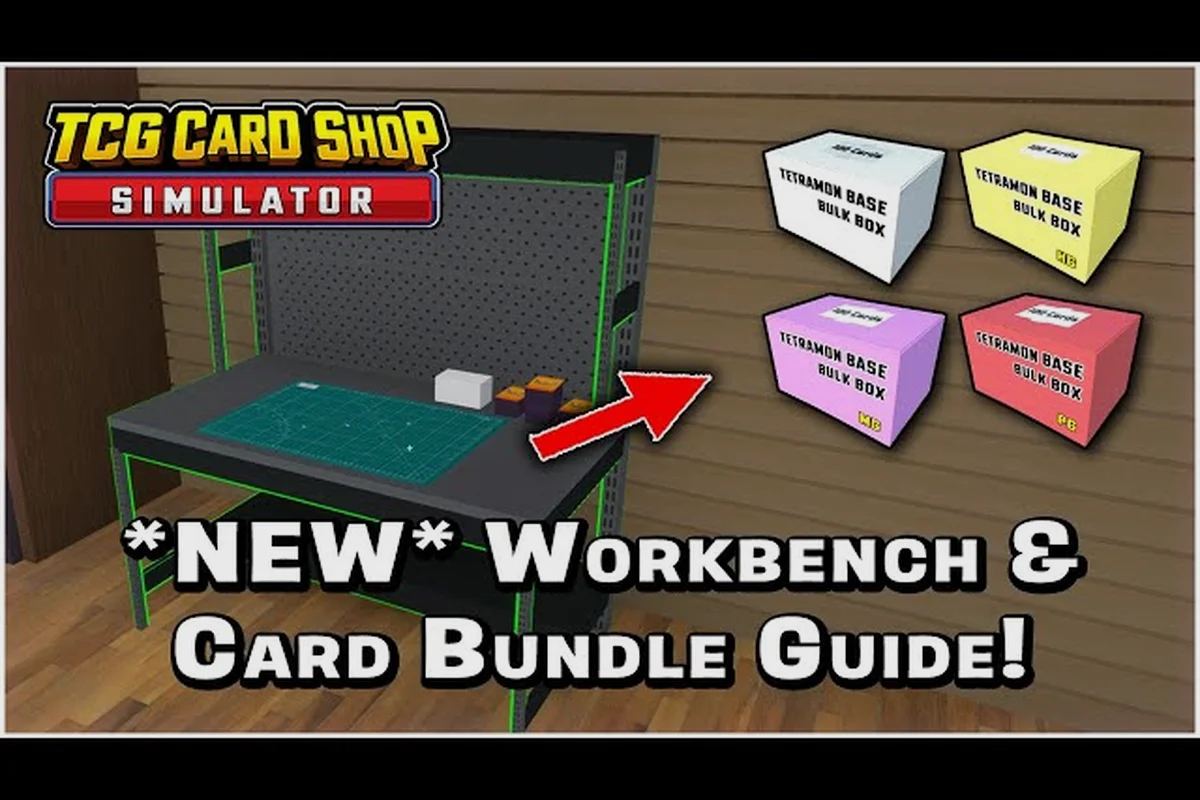
TCG Card Shop Simulator Card List: All 4,436 Cards & Rarity Tiers
Browse the full TCG Card Shop Simulator card list covering 4,436 cards across Basic, Rare, Epic, and Legendary rarity tiers with elements and border prints.
TCG Card Shop Simulator Card Elements: Fire, Water, Earth & Wind
Master the TCG Card Shop Simulator card elements system across Fire, Water, Earth, and Wind, and learn how element identity shapes evolution paths and market demand.
TCG Card Shop Simulator Legendary Cards: Borders
Identify TCG Card Shop Simulator legendary cards by border print, then compare which foil and full art pulls hold the highest market value before you sell them.
All Articles
TCG Card Shop Simulator Card Display: Pricing & Bulk Sales
Price smarter using the TCG Card Shop Simulator card display system, the TCG Price app, and bulk sale tactics that move inventory without tanking margins.

TCG Card Shop Simulator Creature List: Tetramon & EX
Explore the TCG Card Shop Simulator creature list of every Tetramon, learn which EX cards and Grade 10 gems are worth holding, and spot condition-based value swings.
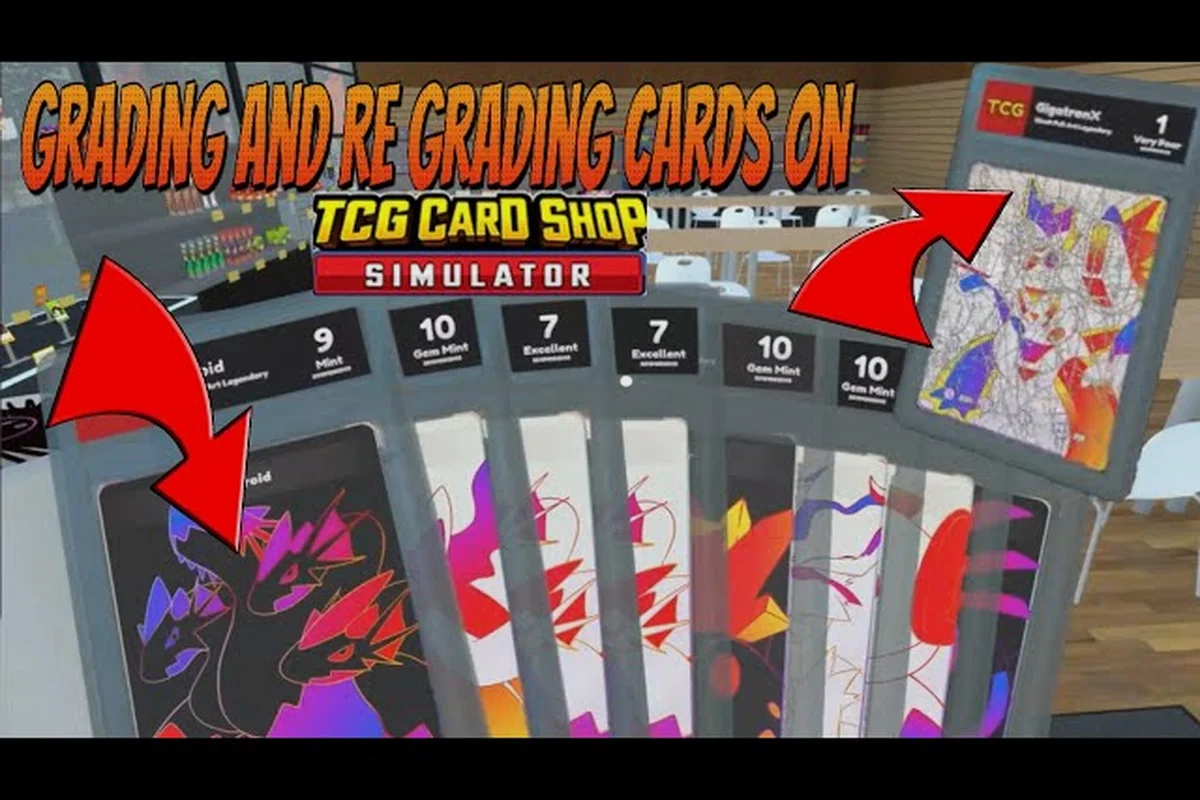
TCG Card Shop Simulator Grading Worth It: Album & Sleeves
Decide if TCG Card Shop Simulator grading is worth the spend by comparing album page value, card sleeve bonuses, and complete collection rewards across every set.
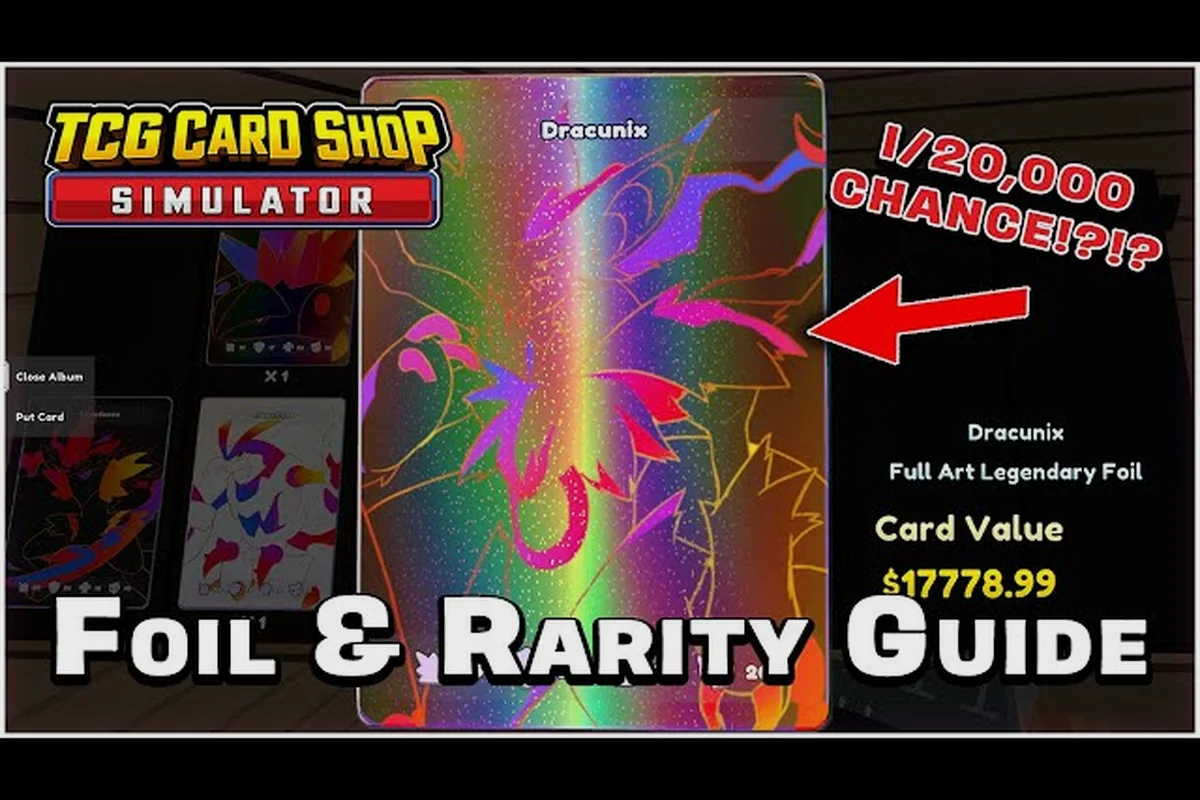
TCG Card Shop Simulator Holo Cards: Values, Grading & Rarest Hits
Find the priciest TCG Card Shop Simulator holo cards, learn how Cardinal grading shifts their value, and see which border prints and foils top the market.