
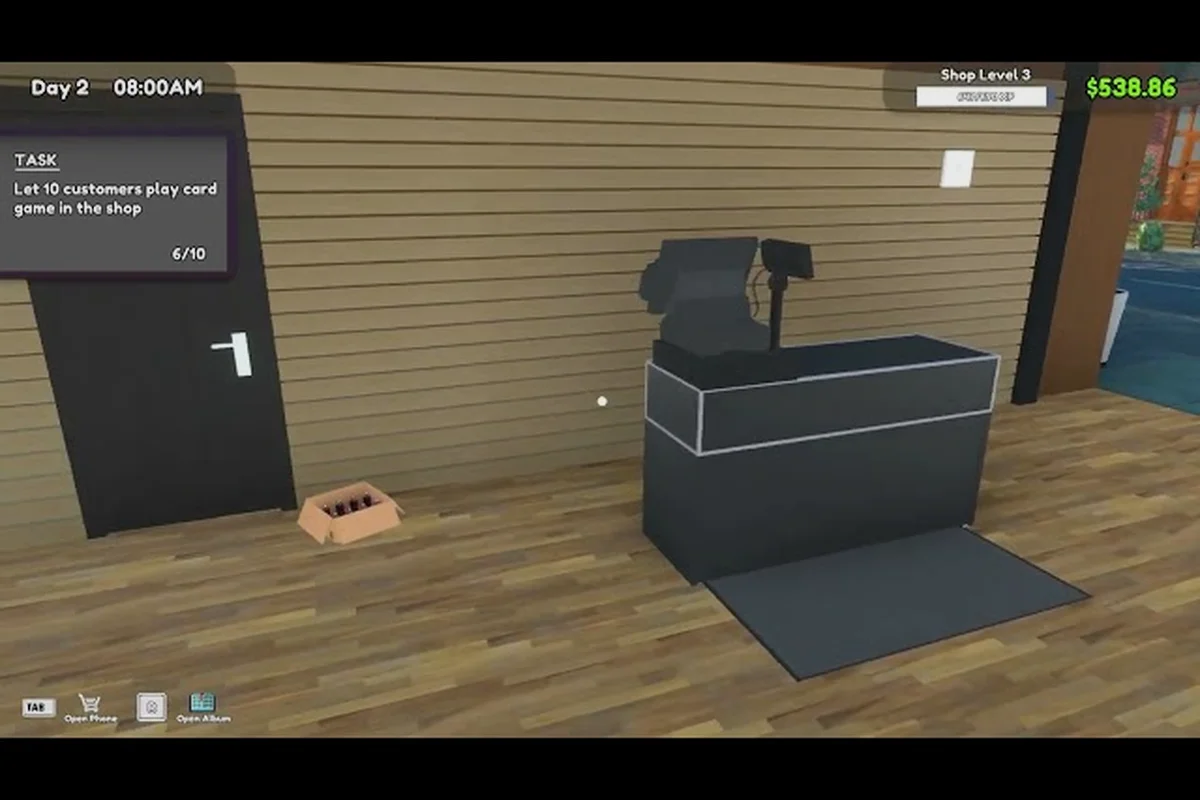
Walk into any high-rated TCG Card Shop Simulator build and the first thing that stands out is not the inventory — it is the ambient layer that ties the room together. Lighting, flooring, wallpaper, rugs, plants, and statues are the visual and atmospheric scaffolding that turns a bare retail box into a place collectors want to linger in, and the right combination does measurable work on customer mood, dwell time, and the kind of foot traffic that keeps a card counter ringing.
Why TCG Card Shop Simulator Lighting Anchors Every Other Decoration
Every decoration category in TCG Card Shop Simulator feeds into a shared atmosphere score, and TCG Card Shop Simulator lighting is the heaviest single contributor. Ceiling fixtures, pendant lamps, neon strips, and wall sconces all change the way customers read the room, how long they stand at a display case, and how the wallpaper and flooring you invested in actually look under shop conditions rather than in the placement preview. The official store page notes the game spans 4,436 cards and supports up to 28 simultaneous customers, which means a poorly lit shop is a much bigger problem than a dim corner in a five-customer test build.
Lighting does not act alone. According to the TCG Card Shop Simulator on Steam listing, accent pieces such as statues, figurines, and plushies double as merchandise, so a well-lit display case pays back both in atmosphere and in shelf revenue. Players who treat lighting as a finish-the-room task tend to miss the synergy: a single pendant over a card display case raises the perceived value of every booster pack inside it, and a neon strip along the back wall softens the visual flatness that bare drywall always produces.
Layered Lighting Beats a Single Bright Source
The lighting catalog in TCG Card Shop Simulator is built around three distinct roles—ambient, task, and accent—and treating them as interchangeable is the most common early mistake. Each role targets a different visibility job: ambient covers navigation, task sharpens card text and price reading, and accent draws the eye toward hero items like statues or neon signs. Doubling up a single overhead fixture to cover all three means the shop reads as flat, the back wall turns into a dead zone, and customer browsing time drops because nothing visually anchors their path.
| Lighting Role | What It Does | Where It Goes | Common Fixtures |
|---|---|---|---|
| Ambient | Fills the whole room so customers can navigate and browse without blind spots | Ceiling center, evenly spaced ceiling rows | Recessed panels, ceiling fans with light kits, frosted pendants |
| Task | Brightens a specific work area so a clerk or customer can read card text and prices | Above the register, above each display case, above the pack-opening table | Track lights, pendant lamps, desk lamps |
| Accent | Highlights a hero piece so it becomes a visual anchor customers walk toward | Behind statues, under display cases, along a back wall | LED strips, neon signs, wall sconces, spotlights |
New clerks usually buy one bright overhead fixture and call it done, which leaves the shop flat and the back wall reading as a dead zone. A better first purchase is a budget split: one ambient fixture for the ceiling, two task pendants for the cases, and a single neon sign behind the register. That trio costs roughly the same as a single premium chandelier but lifts three different zones instead of one.
Lighting Color Temperature Changes the Mood Read
Color temperature is a sub-stat on every lighting item, and the difference between warm and cool is not cosmetic — it changes which decorative items read as "right" for the room. In TCG Card Shop Simulator, each bulb you place carries a Kelvin rating (typically 2700K to 6500K), and that single number silently filters every rug, plant, and statue placed underneath it. A 2700K bulb will make a cool-toned geometric wallpaper look flat and gray, while a 6500K bulb will wash the warmth out of wood flooring and traditional rugs, so the choice of temperature effectively locks you into a matching décor palette before you even buy the first display shelf.
| Temperature | Atmosphere Read | Pairs Well With | Avoid Pairing With |
|---|---|---|---|
| Warm (2700K–3000K) | Cozy, hobby-shop, late-night lounge | Wood flooring, traditional wallpaper, warm-toned rugs | Cold-white neon, ultra-modern statues |
| Neutral (3500K–4500K) | Retail-grade, clean, easy to browse | Tile flooring, neutral wallpaper, most statues and plants | Strong color-tinted neon, heavy themed rugs |
| Cool (5000K–6500K) | Bright, modern, tournament-hall feel | Concrete-look flooring, geometric wallpaper, neon strips | Warm wood, traditional rugs, leafy plants |
A simple rule that holds up in practice: match the color temperature of your lighting to the dominant color of your flooring and wallpaper. If the floor reads warm, the lights should read warm. If the floor reads cold, the lights should read cold. Mixing the two in a small shop makes every other decoration look slightly off, and the effect compounds when you start adding plants and statues.
Building the Floor and Wall Base Before You Hang a Single Light
Lighting only does its job when the surfaces it falls on are already chosen. TCG Card Shop Simulator flooring and TCG Card Shop Simulator wallpaper are the two layers the room reads first, and getting them wrong forces every later purchase into a workaround. Floor choice and wall covering do the visual heavy lifting before a single Furniture List entry is even placed, and pairing them with the right complementary pieces prevents the constant backtracking that derails otherwise solid room builds.
Flooring Sets the Visual Weight of the Shop
Flooring is the single largest surface in any shop, and the texture and tone you pick will quietly decide which lighting, rugs, and statues look "right" for the rest of the build. Because floor tiles cover the full camera frustum, their albedo leaks into every bounce light and tints your pendant lamps, neon strips, and shelf spots toward warm or cool without you touching a single bulb. In practice this means a dark wood plank soaks overhead warm lighting and pushes it amber, while polished tile reflects almost every lumen back into the room, making a single 200-lumen shelf spot read like a 400-lumen floodlight and overpowering the soft rug accents around display cases. Treat the floor as your color anchor first, then layer TCG Card Shop Simulator lighting, rugs, and statues on top.
| Flooring Type | Best For | Atmosphere Read | Maintenance Feel |
|---|---|---|---|
| Wood Plank | Hobby-shop, cozy card-store builds | Warm, lived-in, late-evening | Scratches show, but reads as character |
| Polished Tile | Tournament-hall, retail-clean builds | Bright, clinical, easy to navigate | Wipes clean, reads as professional |
| Concrete | Modern, industrial, neon-heavy builds | Cold, urban, after-hours | Hides scuffs, reads as edgy |
| Patterned Vinyl | Themed, novelty, or seasonal builds | Playful, niche, collector-coded | Wears faster, reads as themed |
A common early-game error is to start with concrete because it is cheap and modern, then add warm pendant lights and traditional rugs in an attempt to "fix" the coldness later. The fix never quite lands because the floor keeps pulling the room back to cool. If you want warm, pick wood. If you want cold, pick concrete or polished tile. Pick the floor first, then buy lighting that matches.
Wallpaper Is the Background Every Other Decoration Sits On
Wallpaper is the second largest surface and the most common place new players freeze, because the catalog is large and the choices feel permanent. They are not — wallpaper swaps are cheap, and the cost of trial-and-error is low.
| Wallpaper Family | Mood | Pair With | Skip If |
|---|---|---|---|
| Solid Neutral | Retail-clean, lets lighting and statues pop | Bold rugs, accent walls of statues, neon strips | You want a themed build with one strong visual identity |
| Patterned Geometric | Modern, energetic, draws the eye | Cool lighting, concrete flooring, minimal plants | Your shop is small — patterns overwhelm small rooms |
| Textured Warm | Cozy, hobby-shop, late-night | Warm pendants, wood floor, leafy plants | Your statues are bright or neon — they fight the texture |
| Brand / Theme Wall | Collector-coded, niche identity | One accent wall only, neutral elsewhere | You plan to swap themes often — themed walls are sticky |
The most reliable starter choice is solid neutral on three walls plus one accent wall, because it gives you a stable background while letting lighting, plants, and statues do the visual work. New players who wallpaper every wall in a strong pattern usually end up replacing it within a few in-game days because the room starts to feel busy.
Rugs Tie Zones Together Without Adding Walls
Rugs are the cheapest zoning tool in the game, and they are how you make a single open room feel like a card shop with separate "areas" — register zone, pack-opening zone, browsing zone. Each rug essentially acts as a visual signal that the floor material has changed function, and because the lighting engine re-bounces warmth and color off rug textures differently than it does off hard flooring, a wool-toned rug under the cash register will visibly catch more light spill from the overhead fixture than the tile around it, so customers read the register as the "warm anchor" of the shop on the very first day. Combined with the placement table below, that is why a single 2x3 rug usually outperforms re-wallpapering the same wall.
| Rug Use | Effect | Placement | Common Mistake |
|---|---|---|---|
| Register zone | Anchors the cash desk, makes the clerk feel grounded | Directly under the register desk | Putting it too far back so the clerk's feet stand on bare floor |
| Browsing zone | Defines a "look at the cases" area in front of displays | In front of the main display case row | Spanning more than half the room — rugs are accents, not flooring |
| Pack-opening zone | Marks the table where customers open boosters | Under the pack-opening table | Skipping it because "the table is enough" — the rug is the zone |
| Hero anchor | Draws the eye to one statue or plant | Under a single accent piece | Stacking multiple rugs — the eye stops tracking zones |
Rugs also work as a temperature bridge. If you picked a cool floor but want warmer atmosphere, a warm-toned rug under the register reads as "this zone is warm" without forcing you to replace the whole floor. That is a much cheaper fix than a flooring swap, and it lets you keep the durable base you already bought.
Plants, Statues, and Accent Pieces That Pay You Back
Accent decoration is where atmosphere becomes revenue, because statues and plants are the items that double as merchandise when priced and shelved correctly. Plants and statues are the most-misunderstood categories in the catalog, because they look like pure set dressing to new clerks.
Plants Are Cheap Atmosphere and Free Foot-Traffic
Plants cost almost nothing, raise the ambient feel of the room, and — because they count as merchandise in the system — can be priced and sold like any other stock item. According to the Steam Workshop section page, custom plants and statues are a popular upload category, which tells you the community treats them as load-bearing decoration, not filler.
| Plant Type | Atmosphere Read | Best Placement | Watch Out For |
|---|---|---|---|
| Leafy Floor Plant | Cozy, lived-in, warm-zone anchor | Beside a reading chair, in a corner near a pendant | Blocking customer path to a display case |
| Small Desk Plant | Quiet detail, register-zone anchor | On the register desk, on a side table | Reading as clutter next to a busy desk |
| Hanging Plant | Vertical interest, frees floor space | From a ceiling beam above a browsing zone | Hanging too low — customers walk into it |
| Cactus / Succulent | Modern, low-maintenance, cool-zone anchor | On a shelf next to statues, on a wide windowsill | Looking out of place in a warm wood-floor build |
A common floor-plan mistake is putting all plants along the back wall, which leaves the front of the shop — the part customers see first — bare. Move at least one plant near the entrance and one beside the pack-opening table so the eye lands on greenery before it lands on inventory. The shop will read as curated rather than stocked, and customers tend to browse longer in curated rooms.
Statues Are the Hero Pieces of the Shop
Statues are the most expensive single decoration item in most catalogs, which is exactly why they are the pieces that should get the best lighting and the clearest placement. A statue under a task pendant, on a rug, in front of a neutral wallpaper, is doing four jobs at once: it is decoration, it is merchandise, it is a room anchor, and it is a light target.
| Statue Style | Pairs With | Avoid | Pricing Tip |
|---|---|---|---|
| Hero Figurine (large, single pose) | Single task pendant, neutral wall, one rug | Crowding with smaller statues | Price high — it is a hero piece and reads as premium |
| Plush / Mascot | Pack-opening zone, kid-friendly builds | Cold lighting, concrete floor | Price mid — high turnover, but not premium |
| Themed Collector Statue | Brand wall, themed rug, accent neon | Mixed with off-theme statues | Price very high — collector-coded customers pay up |
| Small Figurine Cluster | Shelf next to register, on a side table | Spread across the room — they read as scattered | Price low — they are impulse buys, not anchors |
The single biggest stat mistake is buying a hero statue, dropping it on bare floor, and never buying the pendant to light it. The statue is doing one job instead of four, and the shop reads as half-finished. Hero statues deserve hero lighting.
Combining All Six Categories Into One Cohesive Room
The atmosphere score responds to how well the six categories reinforce each other, not how many items you own. A shop with one of each, placed deliberately, scores higher than a shop with twenty items placed randomly. The following build order is the order that produces the highest atmosphere-per-credit spent in early game.
| Step | Buy | Place | Why This Order |
|---|---|---|---|
| 1 | Flooring | Whole floor | Sets the temperature read for everything else |
| 2 | Wallpaper | Three walls neutral, one accent | Gives every later item a stable background |
| 3 | Ambient lighting | Ceiling center, evenly spaced | Lifts the whole room so you can shop the catalog in good light |
| 4 | Rug | Register zone | Anchors the clerk and marks zone 1 |
| 5 | Task pendant | Above the main display case | Lights your highest-margin inventory |
| 6 | Hero statue | On a second rug, in front of the accent wall | Creates the room's visual anchor |
| 7 | Plant | Beside the statue, near the entrance | Softens the statue and greets customers |
| 8 | Accent neon | Behind the register, above the brand wall | Adds the third lighting layer and seals the mood |
| 9 | Second rug | Under the pack-opening table | Defines zone 2 |
| 10 | Small plants / small statues | On shelves, side tables, register desk | Fills the visual gaps without crowding |
Following this order means every purchase lands in a room that is ready for it. Skipping steps and buying statues before you have an ambient light means you are choosing hero pieces in the dark, which leads to the mismatched temperature and tone problems covered earlier. The official OPNeon Games YouTube channel showcases several community builds that follow exactly this layering order, and the difference between a layered build and a parts-catalogue build is visible in the first five seconds of any tour video.
Lighting Blunders That Cost You Sales
Even experienced clerks repeat the same handful of mistakes, because the catalog is large and the pressure to fill the room early is real. Catching these patterns early is the difference between a shop that improves every session and one that needs a full teardown at the next expansion.
| Mistake | Symptom | Cheap Fix | Long-Term Fix |
|---|---|---|---|
| All overhead, no task lighting | Customers crowd under one bright spot | Add one pendant above the main case | Add a track light per case row |
| Warm lights on a cold floor | Room feels "off" but you cannot tell why | Lay a warm rug under the register | Replace the floor or replace the lights — pick a temperature |
| Too many statues, no heroes | Shop reads as a figurine shop, not a card shop | Remove half the statues, keep the best three | Reposition survivors to anchor separate zones |
| Plants clustered on one wall | Front of shop feels bare | Move one plant to the entrance | Add a hanging plant above the browsing zone |
| No accent wall | Every wall competes, nothing wins | Wallpaper one wall in a stronger color or pattern | Move the hero statue in front of that wall |
| Accent neon in the wrong color | Neon fights the wallpaper and floor | Recolor to a tone that matches the room | Move the neon behind the register instead of behind the cases |
| Buying decoration before shelving | Cases are empty, shop looks dead | Finish inventory first, decorate second | Adopt the 10-step build order above |
The cheapest fix in this list is almost always "move, do not buy." A statue that is in the wrong spot is a $0 problem; a statue you replace because you bought the wrong one is a real loss. Walk the shop in person before every new purchase and ask which surfaces are empty, which zones have no anchor, and which lighting layer is missing. The answer usually tells you what to buy next without spending anything.
A Quick Atmosphere Audit You Can Run Between Customers
Run this five-question check between customer waves. It takes about thirty seconds and surfaces the most common atmosphere gaps in your TCG Card Shop Simulator lighting layout before they compound, such as a bare ceiling pushing the brightness budget into overhead fixtures while task zones like the register, display cases, and rug area stay under-lit. Treating the audit as a mandatory checkpoint — not a nice-to-have — is what separates players whose atmosphere score climbs steadily from those who keep stacking new wallpaper, flooring, and statues onto a fundamentally uneven lighting foundation.
-
Where is the brightest spot in the room? If the answer is "the ceiling center and nothing else," you need a task pendant.
-
What is the first thing a customer sees at the door? If the answer is "a wall," you need a plant or statue near the entrance.
-
Where do customers stop longest? If the answer is "nowhere specific," you need a hero statue on a rug under a pendant.
-
Which wall is the busiest? If every wall is busy, you have wallpaper competition. Pick one accent wall and neutralize the others.
-
Where is the dimmest spot? If it is the register, your clerk will be slow. Add a desk lamp or a pendant over the desk.
Answering those five questions honestly is the difference between a shop whose atmosphere score climbs every shift and one that plateaus after the second day — and the gap is almost always a skipped audit followed by impulse-buying more statues, plants, or wallpaper before the previous pendant or desk lamp was even placed. In practice, the plateau players tend to dump their daily budget into a single hero piece near the rug area while leaving the register dim and the entrance wall bare, so the atmosphere meter never compounds. Run the five-question audit first, then spend: lighting placement has to be solved before flooring, wallpaper, and rug layering can add anything meaningful on top.
Frequently Asked Questions
Does TCG Card Shop Simulator lighting actually affect customer mood?
Yes. Lighting is the largest single contributor to the shop's atmosphere score, and the atmosphere score is what drives customer dwell time and the kind of browsing behavior that produces extra sales. Warm lighting also pairs more naturally with wood flooring and warm wallpaper, while cool lighting reads better against concrete and neutral tile. Picking a temperature and sticking with it across lighting, flooring, and wallpaper is the cheapest way to lift mood in a single in-game day.
Should I buy flooring or wallpaper first when starting a new shop?
Flooring first, every time. Flooring is the largest surface in the room and sets the temperature read that lighting, wallpaper, rugs, and statues will all be measured against. If you wallpaper first, you will end up choosing a wallpaper that fights the floor you eventually buy. Starting with floor, then neutral wallpaper, then lighting, then accents produces a coherent build in roughly the same budget as picking favorites and forcing them to fit.
Are statues worth the price, or are they just decoration?
Statues are decoration and merchandise at the same time. The official store page notes that accent pieces such as statues, figurines, and plushies double as retail stock, which means a well-placed hero statue pays for itself when it is shelved and priced correctly. Treat a hero statue as a four-job item — decoration, merchandise, room anchor, and light target — and the price stops feeling high.
Where should I put plants so they actually help the shop?
Place at least one plant near the entrance, one beside the pack-opening table, and one as a softener next to a hero statue. Avoid putting all your plants along the back wall, because the back wall is the part of the shop customers see last. A plant at the entrance sets the mood before the customer has even read the first display case, which is where atmosphere starts doing its real work.
Can I fix a mismatched lighting and flooring combo without rebuilding?
Usually yes, and the cheapest fix is a rug. A warm rug under the register on a cold floor reads as a warm zone, and a cool rug over a warm floor reads as a modern anchor. If rugs are not enough, swap the lighting first — it is cheaper and faster than re-flooring. Only tear up the floor as a last resort, because the atmosphere cost of a mid-session rebuild usually costs more than the credit savings.