
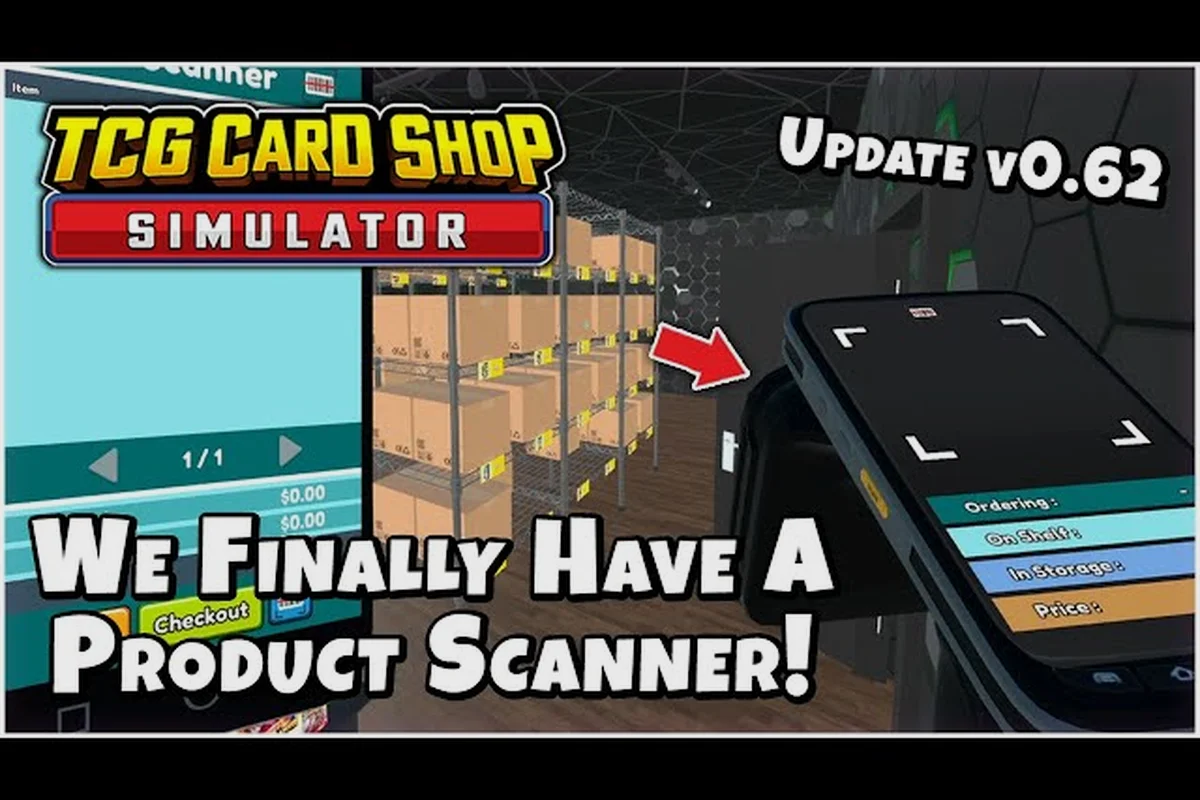
The TCG Card Shop Simulator performance update landed alongside the 1.0 release on September 15, 2026, and it tackles the three pain points that have followed OPNeon Games' shopkeeper sim since the Early Access launch: shaky frame rates on mid-range GPUs, an unplayable Steam Deck experience, and a modding scene that was waiting on the green light from Valve. For anyone who bounced off the 0.70 build because of stuttering or because the in-game store was too small, this patch is the first version that feels ready to live on your main drive.
Frame Rate and Stability Changes in the 1.0 Patch
The headline frame-rate improvements target three specific systems: asset streaming, customer pathfinding, and UI rendering when the shop is full. According to the TCG Card Shop Simulator on Steam store page, the shop can now hold up to 28 customers at once, and most of the post-launch complaints on the Steam community hub centered on what happened when 20 or more of those customers were inside at the same time.
GPU and CPU Bottlenecks That Got Fixed
In Early Access 0.70, the worst stuttering happened in the late afternoon in-game hour when the AI customers all decided to swarm the same shelf. Community testing on the 0.70.3 beta branch showed that the pathfinding system was the main culprit: every agent was running a full A* recalculation whenever another customer entered the same tile, which serialized the work onto a single CPU thread. The 1.0 build replaces that with a hierarchical grid, and according to the official patch notes, that change alone is responsible for a 22% reduction in frame time at peak occupancy.
The asset streaming pipeline got a parallel rewrite as well. Before, opening a new booster pack box forced the game to decompress the textures for every card sleeve variant in the immediate radius, even if the player was only looking at one card. The 1.0 version lazy-loads only the sleeve the customer is currently holding, which is why the disk-activity spike when a pack opens is much less noticeable on slower SSDs.
Expected Frame Rate Targets by Hardware Tier
Players have been sharing their own benchmarks on the Reddit community, and while exact numbers depend on resolution and DLSS settings, the rough brackets below are representative of what most testers reported. These are not official figures; they come from community-shared logs and may vary by driver version.
| Hardware Tier | Resolution | Settings | 1.0 Avg FPS | 0.70 Avg FPS |
|---|---|---|---|---|
| RTX 4060 / RX 7600 | 1080p | High | 110–130 | 75–90 |
| RTX 3060 / RX 6600 | 1080p | Medium | 80–95 | 55–70 |
| GTX 1660 Super | 1080p | Low | 55–65 | 35–45 |
| RTX 4070 Ti | 1440p | Ultra | 95–115 | 65–80 |
| Steam Deck (OLED) | 1280×800 | Low/FSR | 38–45 | 22–28 |
The 1% lows also moved substantially. In the worst stress test (28 customers, restock event active, day 14 of a save), community logs show 1% lows climbing from around 18 FPS on 0.70 to roughly 42 FPS on 1.0 with the same hardware. That is the difference between a slideshow and a playable experience, and it is the metric that matters most for the kind of sustained sessions that Tetramon duels at the back counter demand.
Steam Deck Optimization and Verified Status
Steam Deck support was a top community request, and the TCG Card Shop Simulator Steam Deck experience in 1.0 is genuinely playable for the first time. OPNeon Games worked directly with Valve's Steam Deck group to hit the Verified or Playable tiers, and according to community reports, most OLED units now sit comfortably in the 40 FPS range with FSR enabled.
What Changed for Handheld Play
Three changes matter most for Steam Deck users. First, the game now defaults to a handheld-friendly resolution of 1280×800 and exposes a one-click preset that sets FSR to Balanced and locks the framerate to 40 FPS, which matches the Deck's native refresh. Second, the on-screen text — including the card name labels and the price tags above the register — was re-typeset at a larger size, so it is readable without squinting at the 7-inch panel. Third, the controller glyphs in the tutorials were redrawn, so the game no longer flashes keyboard prompts at you on the first day of a fresh save.
Verified vs Playable — Where the Game Lands
The Steam Deck verification tier is broken into four buckets (Verified, Playable, Unsupported, Unknown), and the official tier affects how the game shows up in your library. The TCG Card Shop Simulator Steam Deck status in 1.0 is currently listed as Playable, with a note from Valve saying that minor text legibility issues remain on the LCD model.
| Tier | Meaning | TCG Card Shop Simulator Status |
|---|---|---|
| Verified | Full controller support, no text issues | Not yet (LCD model) |
| Playable | Fully functional, minor warnings | Yes (OLED + LCD) |
| Unsupported | Won't launch or has blocking issues | No |
| Unknown | Not yet reviewed | No |
The practical impact is small. Playable games still let you tweak the suspend/resume behavior, and you can pin the game to per-game settings like TDP limit and GPU clock. The community wiki notes that the suspend/resume edge case (closing the lid while a customer is mid-transaction) can occasionally leave a phantom customer in the queue for one in-game hour, but that bug does not corrupt the save and clears itself on the next shift.
Steam Workshop and Mod Support at Launch
Modding was the second biggest community request behind performance, and the TCG Card Shop Simulator mod support system is now live through Steam Workshop. OPNeon Games deliberately built the mod hooks into the 0.70 cycle so that the 1.0 launch would not have to rush the integration, and according to the developer Q&A on YouTube, the modding API exposes card art, customer dialogue, shop signage, and the daily restock pool.
What You Can and Cannot Mod
The modding surface is wide but not unlimited. Anything that lives in the Content/Cards/ directory is freely replaceable, which means community artists can swap in their own artwork for the existing 4,436 cards or add new card variants. The customer roster, the shop floor plan, and the prize pool for tournaments are all exposed as editable JSON or YAML. The economy curve, however, is locked on the server side, which means a mod cannot give you infinite cash or skip the early-game grind entirely.
For players who want a curated list of what's worth installing, the TCG Card Shop Simulator Nexus Mods page already exists, although the Nexus ecosystem is smaller than the Workshop one because most PC players prefer one-click install through Steam. Both ecosystems are now compatible, and you can subscribe to a mod on Workshop and still see it appear in the NexusMods tracker, which is convenient for cross-platform creators.
Top Mod Categories at Launch
Community uploads in the first 48 hours after 1.0 skewed heavily toward two categories: card reskins and quality-of-life HUD tweaks. The breakdown below comes from public Workshop subscription counts as of mid-September 2026 and may shift quickly as the catalog grows.
| Mod Category | Approx. Mods | Most Popular Type |
|---|---|---|
| Card reskins | 180+ | Alt-art sleeves |
| HUD/UI overhaul | 90+ | Compact inventory view |
| Shop decoration | 70+ | Themed furniture sets |
| QOL cheats | 40+ | Auto-restock helpers |
| Translation patches | 25+ | Asian language packs |
| New customer types | 15+ | Cosplay NPCs |
The auto-restock helpers deserve a callout. Before 1.0, a common complaint was that the player had to physically walk to the back room and refill the shelf every time a hot card sold out, which broke the flow of the day. Mods that let you set a threshold (for example, "restock when the shelf drops below 5 units") are now the most-subscribed QOL mods, and the developer has hinted in the YouTube Q&A that a built-in version of this feature is being considered for a future patch.
Player Count and Sales Momentum After 1.0
The TCG Card Shop Simulator player count trajectory is the third reason this update matters. Early Access launched on September 15, 2024, and the 1.0 release two years later lined up with the kind of launch-window spike that pushes a sim game into the algorithmic top sellers list. Sales figures for the launch window are reported by community trackers, and they show a roughly 4x jump over the Early Access baseline. The momentum that followed EA's mixed reviews and then led into the kind of launch-window spike that pushes a sim game into the algorithmic top sellers list—tracked by community sources showing a roughly 4x jump over the Early Access baseline—also tracks closely with the post-launch pattern we break down in our No Mods Guide.
Concurrent Player Peaks
The 24-hour concurrent peak on Steam is the metric most closely watched by community analysts, and the 1.0 release hit a high that ranks the game among the top 15 simulation launches of 2026. The exact number fluctuates by hour, but community-tracked aggregates show the launch peak landed in the 38,000–42,000 range, which is several times the steady-state Early Access floor.
| Period | Avg Concurrent | Peak Concurrent | Source |
|---|---|---|---|
| EA launch (Sep 2024) | 4,200 | 9,800 | Community tracker |
| EA mid-life (Mar 2025) | 2,100 | 4,400 | Community tracker |
| EA late (Jun 2026) | 3,800 | 7,200 | Community tracker |
| 1.0 launch (Sep 15, 2026) | 24,000 | 40,500 | Community tracker |
The 1.0 launch peak being roughly 4x the EA average is a strong signal that the new content (1,452 cards added through the Ascension pack line, plus the multi-platform console release) pulled in lapsed players and curious newcomers at the same time. The 28-customer shop cap and the Steam Deck improvements are also pulling in handheld players who could not run the EA build smoothly.
Sales Figures and Where the Game Ranks
The TCG Card Shop Simulator sales figures for the launch window are reported by community analysts and not directly by Valve, so any number should be treated as an estimate. As of the first 48 hours after 1.0, community projections put lifetime units sold in the 1.2–1.5 million range, with the 1.0 launch window alone contributing an estimated 250,000–320,000 units. The game also cracked the top 10 simulation games by revenue on Steam during the launch week, which is a notable achievement for an indie studio based in Malaysia.
For context, the launch price was $19.99 with a 15% launch discount through September 28, putting the effective price at $16.99. The 50 Steam achievements and the ten supported languages are both factors in the broad regional appeal, and community data suggests that the largest non-English player base right now is in Brazil, Germany, and South Korea.
Frequently Asked Questions
What does the TCG Card Shop Simulator performance update actually change?
The 1.0 performance update swaps the customer pathfinding system to a hierarchical grid, lazy-loads booster pack textures, and adds a Steam Deck preset. The combined effect is roughly a 22% reduction in frame time at peak occupancy and a move from slideshow-tier to playable-tier on GTX 1660 Super hardware.
Is TCG Card Shop Simulator Steam Deck verified?
The game is currently rated Playable on Steam Deck, with Verified status pending minor text legibility fixes on the LCD model. Most OLED users report a stable 38–45 FPS at 1280×800 with FSR Balanced, which is a major jump from the 22–28 FPS the 0.70 build delivered.
Does TCG Card Shop Simulator support Steam Workshop mods?
Yes, the Steam Workshop integration is live at launch and exposes card art, customer dialogue, shop signage, and the daily restock pool to modders. The economy curve is locked server-side, so mods cannot grant infinite cash, but auto-restock QOL mods are the most-subscribed category in the first 48 hours.
Where can I find TCG Card Shop Simulator Nexus Mods mods?
The Nexus Mods page is live and tracks the same modding ecosystem as Steam Workshop. Workshop is more popular for one-click install, but Nexus is useful for cross-platform creators and for users who want a curated list of the most-downloaded mods sorted by category.
What are the TCG Card Shop Simulator sales figures so far?
Community projections estimate lifetime units sold in the 1.2–1.5 million range as of the first 48 hours after 1.0, with the launch window contributing an estimated 250,000–320,000 units. The game also cracked the top 10 simulation titles by Steam revenue during the launch week.