
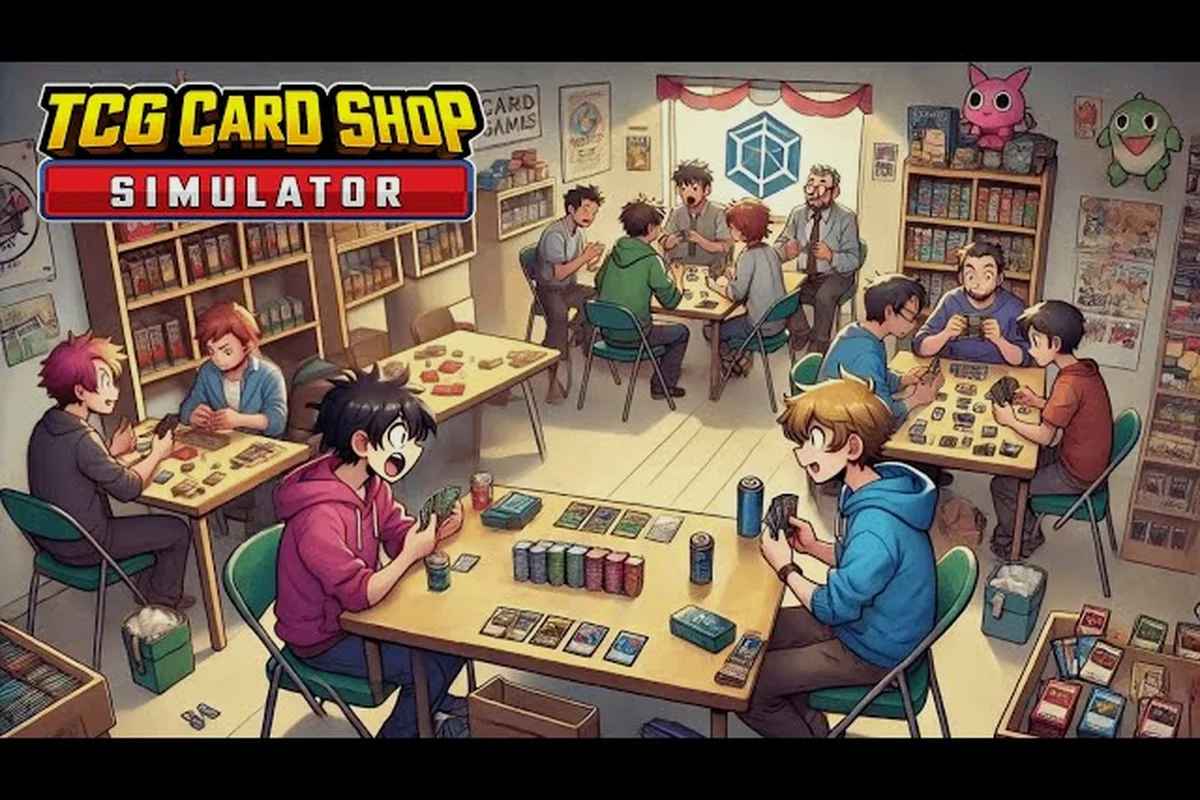
What the TCG Card Shop Simulator Silver Legacy Event Actually Does
The TCG Card Shop Simulator silver legacy event sits in the middle tier of the twelve play-table formats, priced above the cheap cups but well below the priciest late-game events. According to the TCG Card Shop Simulator on Steam store page, every play table converts floor space into hourly income, and every event format layers a daily upkeep cost on top of that base income while simultaneously shifting which card categories are worth more and which are worth less. Silver Legacy leans into that shift harder than almost any other format, because it targets a specific subset of high-finish cards that most shop owners underprice.
| Multiplier tier | Affected card group | Multiplier range | Example qualifying card finish |
|---|---|---|---|
| Silver-border boost | Cards with a silver border variant in the active binder | 1.8x – 2.2x sell price | Silver-foil Holo, silver-bordered Full Art |
| Non-silver drag | Same-identity cards lacking the silver finish | 0.6x – 0.8x sell price | Standard Holo, standard Full Art of the same card |
| Base play-table rate | Floor-space hourly income (format-independent) | 1.0x reference | Any booster pack, battle deck, or card sleeve |
| Daily upkeep | Event-format surcharge on top of base income | Mid-tier bracket (above Pauper, below Holo Heaven) | Flat per-event-day deduction |
The event is one of several "rarity-tilt" formats that use the same underlying mechanic: a hidden multiplier is applied to the sell price of qualifying cards at the in-store binder, while a counter-multiplier quietly drags down everything else. Standard does this with a random rarity. Pauper pushes commons up and rares down. Silver Legacy, however, is more surgical: it boosts the value of cards that have a silver border variant while penalizing cards that share their identity but lack that finish, creating an arbitrage window for anyone who understands what the event is actually asking for.
Players who treat Silver Legacy as "just another cup" miss the point. The format only generates meaningful profit when the shop is pre-stocked with the right inventory, and that means knowing which cards qualify, which expansions carry them, and how the daily cost compares to the projected markup. Community testing, as reported on the OPNeon Games Steam community hub, suggests the event runs a roughly 1.8x to 2.2x price multiplier on silver-border cards during its active hours, while applying a 0.6x to 0.8x drag to non-qualifying stock. The exact spread shifts per patch, but the directional logic has held since the format's introduction.
For shop owners who already understand TCG Card Shop Simulator card borders and finish tiers, Silver Legacy is one of the cleanest mid-game profit engines in the game. For everyone else, this article breaks down the format, its cost, its inventory requirements, and how it stacks up against competing events like Holo Heaven, Golden Star, and the Full Expansion event.
Cost, Schedule, and How Silver Legacy Compares to Other Mid-Tier Events
Every event format in TCG Card Shop Simulator carries three numbers a shop owner has to track: the daily upkeep cost to keep the table running, the qualifying card category, and the penalty applied to non-qualifying inventory. Silver Legacy's numbers put it squarely in the middle of the format roster, and the table below shows how it lines up against the other events new players are most likely to see unlocked.
| Event Format | Daily Cost | Boosted Category | Penalized Category | Best Inventory Source |
|---|---|---|---|---|
| Standard | Free | Random rarity | Opposite rarity | Any booster surplus |
| Pauper | $20 | Commons | Rare / Epic | Pauper-tier packs |
| Silver Legacy | $95 | Silver border cards | Non-silver equivalents | First Edition boxes |
| Holo Heaven | $130 | Holo finish cards | Non-holo stock | Holo-heavy expansions |
| Golden Star | $180 | Gold border cards | Non-gold equivalents | Premium booster boxes |
| Full Expansion | $210 | Newest expansion cards | Older expansion stock | Latest release boxes |
| Ex Battle | $150 | EX-rarity cards | Standard rarity | EX booster packs |
The TCG Card Shop Simulator silver legacy event is not the cheapest format to run, but the markup on silver-border cards is strong enough to clear the daily cost with a single well-chosen table, provided the binder is pre-loaded. According to community data posted in the TCG Card Shop Simulator Steam discussions, shop owners running Silver Legacy with a binder of 40+ qualifying cards routinely net between $300 and $500 per in-game day once the multiplier kicks in, while the penalty on non-qualifying stock is mild enough that leftover commons and rares do not crater the day's profit.
Why the $95 Daily Cost Matters
The TCG Card Shop Simulator event unlock order pushes Silver Legacy into the rotation after the cheap element cups and before the priciest late-game formats. By the time a shop owner can afford to run Silver Legacy, the daily $95 upkeep is not a budget-breaker, but it is a cost that punishes empty tables. A Silver Legacy table with fewer than 25 qualifying cards in the binder will, according to player reports, lose money for the day once the penalty drag on leftover stock is factored in. The format is designed for owners who pre-plan, not for those who click "Start Event" on a whim.
The unlock pacing is also worth noting. Holo Heaven and Golden Star are both more profitable on paper, but they require inventory specializations that take longer to build. Silver Legacy's qualifying card pool is wider than the gold or holo formats, which means the format becomes useful earlier in a save file and stays useful as a steady mid-game earner even after the priciest late-game events are unlocked.
Inventory Strategy: What to Stock Before Starting Silver Legacy
The single biggest mistake new players make with the TCG Card Shop Simulator silver legacy event is starting it without checking the binder first. Because the format's profit curve is heavily front-loaded toward qualifying cards, the inventory that is on the shelf at the moment the event starts is the inventory that determines whether the day is profitable or not. Below is a practical pre-flight checklist that experienced players run through before paying the $95 daily cost.
Step 1: Audit the Binder for Silver-Border Cards
Open the binder and filter by finish. The qualifying cards for Silver Legacy all carry a silver border, which is a separate cosmetic finish from holo, gold, or first-edition stamps. According to the Steam developer news feed, silver borders are most common on mid-tier rarity cards from older expansions, and the supply curve favors owners who have been opening packs since the early game. Owners who skipped straight to expensive boosters will find the qualifying pool thin.
Step 2: Pad with Booster Boxes from Older Sets
The fastest way to build a Silver Legacy-ready binder is to crack older booster boxes that have a high silver-border pull rate. Players familiar with TCG Card Shop Simulator pack pull rates and best packs to open already know which boxes lean silver versus gold versus holo; for Silver Legacy specifically, the older the expansion, the better the silver-to-gold ratio tends to be. Two to three booster boxes from a silver-leaning set will usually generate enough qualifying cards to clear the 25-card minimum.
Step 3: Move Non-Silver Inventory to the Sell Case
Any non-qualifying cards that are sitting in the binder should be relocated to the sell case before the event starts, because the format's penalty drag will quietly cut their value while the event is active. Players who leave a mixed binder running under Silver Legacy will see their commons and rares priced lower than usual, which can snowball into a daily loss if the binder is full of low-rarity stock. The fix is simple: empty the binder of everything non-silver, let the event apply its boost to a clean qualifying pool, and re-stock the binder after the format ends.
Step 4: Watch the Clock
Silver Legacy is not a 24-hour format. Most event formats run on a fixed in-game schedule, and Silver Legacy's window tends to land in the mid-afternoon block, which is also when shop traffic peaks. Owners who start the event at 8 a.m. and then go to lunch will miss the prime customer window and forfeit the markup to a quiet floor. The format rewards owners who are physically at the counter while the event is hot.
Silver Legacy vs. Holo Heaven vs. Golden Star: Which Mid-Tier Event Pays Best
The TCG Card Shop Simulator silver legacy event does not exist in a vacuum. By the time it is unlocked, Holo Heaven and Golden Star are both sitting in the format rotation, and the Full Expansion event is usually one tier behind. Picking the right event for the day is a real optimization decision, and the table below compares the three formats on the metrics that matter most for a working shop.
| Metric | Silver Legacy | Holo Heaven | Golden Star |
|---|---|---|---|
| Daily Cost | $95 | $130 | $180 |
| Qualifying Pool Size | Medium (silver border) | Small (holo finish) | Small (gold border) |
| Average Multiplier | ~2.0x | ~2.4x | ~2.6x |
| Inventory Build Time | Medium | Long | Long |
| Penalty Drag on Leftovers | Mild (0.6x-0.8x) | Moderate (0.5x-0.7x) | Heavy (0.4x-0.6x) |
| Profit Ceiling per Day | $300-$500 | $400-$650 | $500-$800 |
| Best For | Steady mid-game earners | Holo-heavy inventories | Gold-heavy inventories |
The takeaway is straightforward: Holo Heaven and Golden Star both have higher ceilings, but they also have higher floors. A shop that does not have a binder dominated by holo or gold cards will lose money on those formats, because the penalty drag is steep enough to wipe out the daily upkeep and then some. Silver Legacy, by contrast, has a softer penalty and a wider qualifying pool, which makes it the most forgiving of the three mid-tier formats. According to player reports on the OPNeon Games video library, Silver Legacy is the format that most often gets left running in the background while the owner is handling other shop tasks, because it does not require constant babysitting to stay profitable.
For shop owners who want to understand the card value mechanics that drive all three of these formats, the TCG Card Shop Simulator holo cards and grading guide is a useful companion read. It covers how holo and gold finishes interact with the grading app, which is the other major profit lever in the late game.
When to Skip Silver Legacy and Run a Cheaper Cup Instead
Silver Legacy is not always the right call. There are real situations where a shop owner is better off running a cheap element cup or the free Standard event instead of paying the $95 daily cost. Knowing when to skip is part of running the format well.
The Binder Has Fewer Than 20 Qualifying Cards
If the binder is short on silver-border stock, Silver Legacy will not earn its keep. The format's break-even point, according to community testing, sits around 20-25 qualifying cards. Below that, the penalty drag on the rest of the binder outweighs the markup on the silver cards, and the day ends in the red. Owners in this situation should either spend the morning cracking booster boxes to pad the binder or run a cheaper format for the day and revisit Silver Legacy tomorrow.
The Ex Battle Event Is Unlocked and Stocked
For owners who have already built an EX-rarity inventory, the TCG Card Shop Simulator ex battle event can outperform Silver Legacy on a good day, because the EX pool is smaller and the markup is more concentrated. Ex Battle costs $150 per day, which is higher than Silver Legacy, but the multiplier on EX cards is strong enough that a well-stocked binder clears the cost faster. Owners who find themselves with a deep EX inventory should weight Ex Battle above Silver Legacy in their daily rotation.
The Full Expansion Event Just Dropped
The TCG Card Shop Simulator full expansion event is the format to run on release week for any new booster set, because the markup on the newest cards is at its peak before the supply curve catches up. Silver Legacy will be there the following week; the Full Expansion event's edge only lasts a few in-game days, so owners who miss the window leave real money on the table. New players who want a fuller picture of the TCG Card Shop Simulator full release progression and event pacing will find the timing math spelled out there.
Silver Legacy Inventory Pairs Well with the Rare Pack Cracking Loop
Owners who already run a daily TCG Card Shop Simulator rare pack and epic pack cracking loop generate a steady trickle of silver-border cards as a byproduct, which means Silver Legacy becomes a natural end-of-day event to run once the rare packs are opened and the qualifying cards are filed into the binder. The two activities reinforce each other, and experienced owners tend to chain them rather than treat them as separate optimizations.
Frequently Asked Questions
What does the TCG Card Shop Simulator silver legacy event actually boost?
The silver legacy event boosts the sell price of any card with a silver border finish, applying a roughly 1.8x to 2.2x multiplier while the format is active. Cards without a silver border are penalized by a 0.6x to 0.8x drag, so the binder should be pre-stocked with qualifying cards before paying the $95 daily cost.
How do I unlock the silver legacy event in TCG Card Shop Simulator?
The TCG Card Shop Simulator event unlock order introduces Silver Legacy after the cheap element cups and before the priciest late-game formats. The unlock is tied to player level and shop reputation, so working through the early-game reputation milestones is the fastest path to seeing the format appear in the play-table rotation.
Is silver legacy better than holo heaven for mid-game profit?
For most shop owners, yes, because the qualifying pool is wider and the penalty drag is milder. Holo Heaven has a higher ceiling, but it requires a holo-heavy inventory to clear the $130 daily cost. Silver Legacy is the safer pick for owners whose binders are not yet specialized toward holo or gold finishes.
Can I run silver legacy and another event at the same time?
No. Each play table can only host one event format at a time, and the event's multiplier only applies to inventory sold while the format is active. Running Silver Legacy on one table while a cheaper cup runs on another is a valid strategy, but two Silver Legacy tables do not stack their multipliers on the same binder.
How does the silver legacy event interact with the grading app?
The grading app operates independently of the play-table event, so cards graded through Cardinal's Grading keep their grade multiplier on top of whatever event boost is active. For Silver Legacy specifically, grading a silver-border card before the event starts can stack a meaningful additional markup, but the grading cost has to clear before the format's daily upkeep does.